
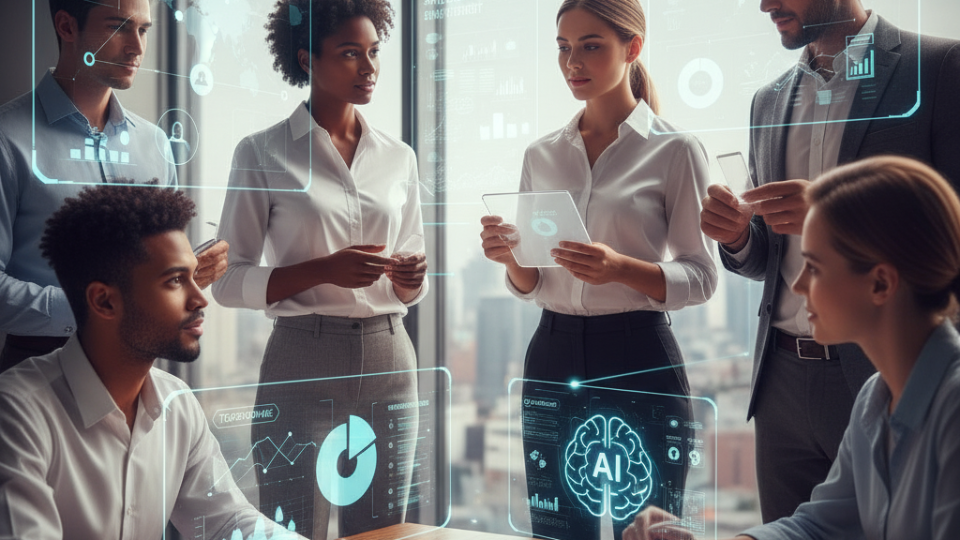
Think about the last time you learned a new, complex skill for your job. Was it through a generic online course, or a personalized experience tailored to your exact needs and learning style? For many, the answer leans towards the former, highlighting a critical gap in professional development. A recent LinkedIn report found that 75% of professionals believe there’s a skills gap in their organization, yet traditional training often fails to address this effectively. Artificial Intelligence in education isn’t just for academic classrooms; it’s a powerful force set to revolutionize how modern teams acquire, retain, and apply knowledge. By strategically integrating AI, organizations can transform their learning strategies, foster continuous growth, and build highly adaptable, future-ready workforces.
Personalized Learning Paths and Skill Development
One of AI’s most profound impacts on corporate education is its ability to create highly personalized learning paths. Unlike one-size-fits-all training modules, AI-powered platforms can assess an individual’s existing skill set, identify knowledge gaps, and recommend specific content, courses, or exercises tailored to their role and development goals. This adaptive approach ensures every team member receives the most relevant training, maximizing engagement and retention.
Consider how AI personalizes learning:
- Adaptive Content Delivery: AI platforms dynamically adjust the difficulty and type of learning materials based on a user’s progress and comprehension.
- Skill Gap Analysis: Algorithms pinpoint specific areas where an individual needs improvement, allowing for targeted interventions rather than broad training.
- Role-Specific Curricula: Customizing learning modules to align with the unique requirements and challenges of different roles within a modern team.
This precision learning accelerates skill acquisition, making training more efficient and directly impactful on individual and team performance.
Intelligent Content Curation and Creation
Modern teams face an overwhelming amount of information, making it difficult to find truly valuable learning resources. AI streamlines this by intelligently curating and even generating learning content, ensuring teams have access to up-to-date, relevant, and engaging materials. This reduces the burden on learning and development (L&D) teams while enriching the learner experience.
AI in content management can:
- Aggregate and Recommend Resources: Scour internal and external knowledge bases to suggest relevant articles, videos, or tutorials based on a learner’s profile and current tasks.
- Generate Practice Exercises: Create tailored quizzes, simulations, or coding challenges to reinforce learning concepts.
- Summarize Complex Information: Condense lengthy reports or technical documents into digestible summaries, helping teams quickly grasp key points.
By providing easy access to pertinent, high-quality learning content, AI fosters a culture of continuous learning and knowledge sharing within the organization.
Real-time Performance Support and Coaching
Learning doesn’t stop after a training module; it continues in the flow of work. AI can provide real-time performance support and coaching, helping modern teams apply new knowledge directly to their tasks and improve on the job. This immediate assistance reduces frustration and accelerates skill mastery.
Think about AI’s role in active support:
- Virtual Coaching: AI-powered tools can offer personalized feedback on written communications, presentations, or even sales pitches, suggesting improvements in tone, clarity, or persuasiveness.
- In-the-Moment Guidance: Integrating AI into workflows (e.g., CRM or project management tools) to provide contextual help, suggesting best practices or troubleshooting steps for specific tasks.
- Scenario-Based Simulations: Creating realistic virtual environments where team members can practice critical skills (e.g., customer negotiations, complex technical procedures) and receive immediate AI feedback.
This continuous feedback loop turns everyday tasks into learning opportunities, making knowledge application seamless and effective.
Streamlining Administrative Tasks for L&D Teams
For learning and development teams, a significant amount of time is often consumed by administrative tasks, from tracking course completions to managing user enrollments. AI can automate many of these mundane processes, freeing L&D professionals to focus on strategic initiatives, curriculum design, and direct learner support.
AI-driven automation handles:
- Learner Enrollment and Progress Tracking: Automatically enrolling individuals in courses based on role or skill gaps and monitoring their progress.
- Reporting and Analytics: Generating detailed reports on learning engagement, completion rates, and skill proficiency, providing insights for program improvement.
- Certification Management: Automating the issuance and tracking of certifications and compliance training.
- Personalized Reminders: Sending automated notifications for upcoming deadlines, new course recommendations, or skill refreshers.
By reducing administrative overhead, AI empowers L&D teams to be more strategic and responsive to the evolving learning needs of the modern workforce.
Fostering Collaborative Learning and Knowledge Sharing
While personalization is key, AI also plays a crucial role in fostering collaborative learning and knowledge sharing among modern teams. By identifying connections and facilitating interactions, AI can transform how teams collectively build and leverage their expertise.
AI’s contribution to collaboration includes:
- Expert Identification: AI can analyze internal communications and project contributions to identify subject matter experts within the organization, making it easier for team members to connect with the right person for help.
- Curated Learning Groups: Suggesting relevant communities of practice or internal forums based on shared learning interests or skill development goals.
- Automated Knowledge Base Updates: Identifying frequently asked questions or emerging knowledge needs and suggesting new content for internal wikis or knowledge bases, often drafted by AI for human review.
This intelligent facilitation strengthens internal networks, breaks down knowledge silos, and creates a more connected, collaborative learning ecosystem.
AI is poised to fundamentally redefine corporate education, moving beyond static courses to dynamic, personalized, and continuously evolving learning experiences. By implementing AI for personalized learning paths, intelligent content management, real-time performance support, administrative automation, and enhanced collaboration, modern teams can build a culture of continuous growth. This strategic embrace of AI doesn’t just improve efficiency; it equips your workforce with the adaptive skills needed to thrive in an ever-changing professional landscape.
What is the single biggest challenge your team faces in professional development that you believe AI could help solve?