
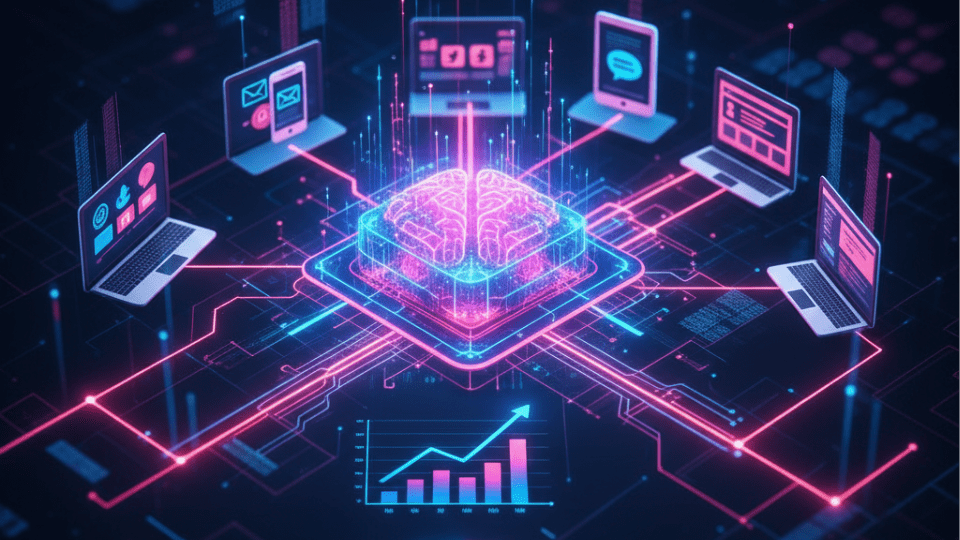
In today’s fragmented digital landscape, customers interact with brands across an average of six touchpoints before making a purchase. Imagine manually orchestrating personalized messages across emails, social media, SMS, and live chat for every single prospect. It’s a logistical nightmare that quickly drains resources and leads to missed conversion opportunities. The solution lies in multi-channel automation, a strategy that synchronizes customer journeys across all platforms, delivering consistent, relevant messages at scale. This isn’t just about sending automated emails; it’s about creating a unified, intelligent system that drives conversion optimization by meeting customers exactly where they are.
Unifying the Customer Journey Across Disparate Channels
The biggest challenge in multi-channel marketing is often the disconnect between platforms. A customer might see an ad on Instagram, click a link, browse your website, and then abandon their cart, only to receive a generic email days later that ignores their recent activity. Multi-channel automation solves this by unifying the customer journey. It ensures that every action a customer takes on one channel informs the next interaction on another. This continuity creates a cohesive brand experience. If a customer views a product page but doesn’t convert, automation can trigger a targeted SMS reminder with a direct link, followed by a personalized email showcasing related products. This integrated approach guides prospects smoothly through the conversion funnel, no matter their preferred channel.
Personalizing at Scale: Beyond First Names
True conversion optimization through multi-channel automation goes far beyond simply inserting a customer’s first name. It involves dynamically adapting content, offers, and timing based on real-time behavior and preferences. Imagine a prospect who engages with your social media content about “sustainable fashion.” Automation can then ensure they receive emails featuring your eco-friendly collection, see website pop-ups offering a discount on sustainable items, and even get targeted ads for ethical brands you carry. This level of personalized relevance fosters deeper engagement and trust. When customers feel a brand understands their unique needs across every platform, they are significantly more likely to convert. Automation makes this hyper-personalization feasible for thousands of customers simultaneously.
Intelligent Lead Nurturing Through Triggered Workflows
One of the most powerful applications of multi-channel automation is intelligent lead nurturing. Instead of relying on static drip campaigns, automation enables dynamic, triggered workflows that respond to specific customer actions or inactions. Examples include:
- Behavioral Triggers: A customer downloads a whitepaper (email follow-up), visits a pricing page multiple times (live chat prompt), or adds an item to their cart but doesn’t purchase (abandoned cart email/SMS).
- Time-Based Triggers: Sending a welcome series after signup, a re-engagement campaign after inactivity, or birthday offers.
- Demographic/Firmographic Triggers: Tailoring messages based on industry, company size, or job title.
These automated sequences ensure leads receive timely, relevant information designed to move them closer to conversion, without requiring constant manual intervention. It’s about delivering the right message, through the right channel, at the perfect moment.
Streamlining Retargeting and Re-engagement Campaigns
Multi-channel automation dramatically enhances retargeting and re-engagement efforts, which are crucial for recovering lost conversions. Instead of relying on generic display ads, you can create sophisticated automated sequences. If a customer views a specific product but leaves your site, automation can trigger:
- A personalized email showcasing that exact product, possibly with a limited-time offer.
- A targeted social media ad displaying the product with user reviews.
- An SMS reminder after 24 hours if no action is taken.
This coordinated approach maximizes your chances of bringing hesitant prospects back to complete their purchase. Automation ensures these efforts are timely, consistent, and appear across the channels where the customer is most active, significantly boosting recovery rates.
Leveraging Data and Analytics for Continuous Optimization
The strength of multi-channel automation lies in its ability to generate rich, integrated data, which then fuels continuous optimization. By tracking how customers interact with your automated messages across all channels, you gain unparalleled insights into what drives conversions. Analyze metrics such as:
- Channel-specific engagement rates: Which channels are most effective for different types of messages?
- Conversion paths: Which sequence of interactions across channels most frequently leads to a purchase?
- Drop-off points: Where are customers disengaging, and which channel might be best for re-engagement?
- A/B test results: Continuously test different messages, timings, and channels within your automated workflows to identify the highest-performing strategies.
This data-driven feedback loop ensures your multi-channel automation is not static, but constantly evolving and improving its conversion optimization capabilities.
Multi-channel automation transforms disconnected marketing efforts into a synchronized conversion engine. By unifying customer journeys, delivering personalized experiences at scale, intelligently nurturing leads, streamlining re-engagement, and leveraging comprehensive analytics, businesses can achieve unparalleled conversion optimization. This integrated approach ensures every interaction works in harmony, guiding customers effortlessly towards becoming loyal advocates.
Is your business still managing channels in silos, or are you ready to leverage the power of multi-channel automation for superior conversions?