
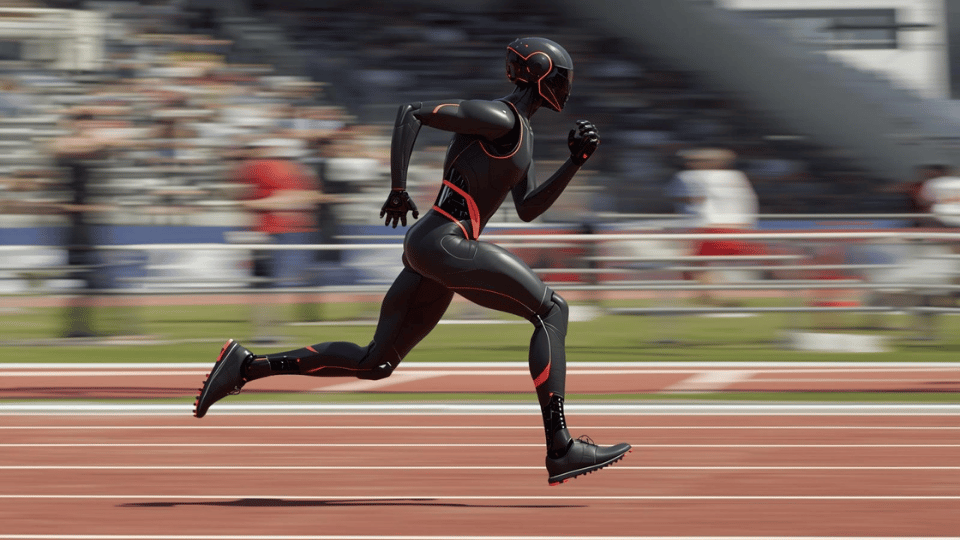
The finish line of the Beijing half-marathon just became a historic site for robotics. Today, a humanoid robot sprinted across the line in a staggering 50 minutes and 26 seconds. This time did more than just win the race. It completely shattered the human world record of 57 minutes recently set by Jacob Kiplimo. While humans have spent thousands of years perfecting the art of long-distance running, machines have caught up in just a few decades. This event proves that the gap between human biological limits and mechanical potential is closing faster than anyone expected.
Comparing a human to a machine might feel a bit like comparing a cheetah to a car. One social media user joked that their car can outrun a cheetah too, but that misses the point of this specific race. This was not about a car on four wheels. This was about a humanoid form, balancing on two legs and navigating a real-world track. The progress in just one year is hard to wrap your head around. Last year, the fastest robot took two hours and 40 minutes to finish the same distance. At the time, most people laughed it off because even an amateur human runner could beat that. Nobody is laughing today.
The Brains Behind the Sprint
The winning machine came from the labs of the Chinese smartphone giant, Honor. They actually had two high-performing robots on the track. One was even faster, finishing in a mind-blowing 48 minutes and 19 seconds. However, that specific robot was remote-controlled by a human pilot. The robot that took the official trophy finished in 50:26 but did so completely on its own. It used autonomous AI to manage its balance, pace, and navigation. The judges used a weighted scoring system that favored independent machines, which is why the autonomous Honor bot took home the gold.
This race was a massive test for robotic stability. Out of all the mechanical participants, about 40% ran autonomously. The other 60% relied on remote control. Not every machine had a smooth day, though. The track was full of challenges that a human runner takes for granted. One robot famously tripped and fell right at the starting line. Another lost its way and slammed into a safety barrier. These failures show that while the top robots are elite athletes, the rest of the field is still learning how to walk.
Why This Matters for the Future
Watching a robot run a half-marathon is cool, but the implications go way beyond sports. If a robot can maintain this kind of speed and balance on a public road, it can handle almost any environment. This tech will eventually move into search and rescue, delivery services, and industrial work. The ability to move fast over long distances without getting tired is a massive advantage. We are seeing the birth of a new kind of athlete, one that does not need a rest day or a high-carb meal to perform at its peak.
As these machines continue to improve, we have to ask what is next. Will we see a dedicated robotic Olympics? Or will we eventually allow machines to compete alongside humans in major marathons? For now, the Beijing half-marathon serves as a wake-up call. The era of human dominance in physical endurance is officially under threat. The robots are not just coming. They are already running past us.