
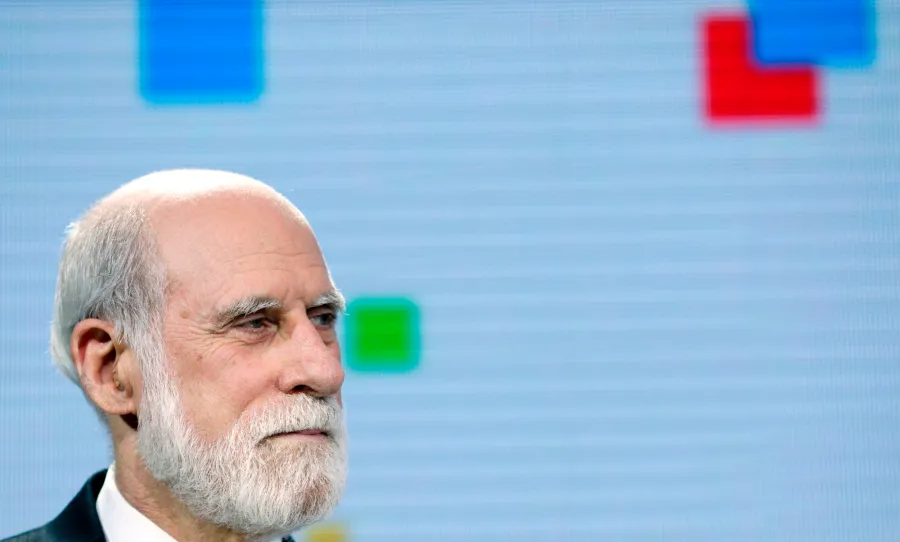
One of the most influential journeys in technology history is officially coming to a close. Vinton Cerf, widely recognized as one of the chief architects of the modern digital world, will step down from his long-time position as Google’s chief internet evangelist next week. His departure marks the end of an era for both the search giant and the global network he helped build from scratch.
The announcement came during a video broadcast at the Open Frontier conference, an event organized by the Laude Institute. Dave Patterson, a prominent UC Berkeley professor celebrated for his pioneering work on processor architectures, shared the news with attendees. Patterson praised Cerf’s incredible timeline, noting that he is retiring exactly one week from today, and asked the audience to give him a roaring round of applause for a brilliant, generation-defining career. Google did not immediately answer press messages or provide an official statement before publication.
Cerf, who is eighty-two years old, built his legendary status alongside his primary collaborator, Robert Kahn. In the nineteen-seventies, the engineering duo designed and popularized TCP/IP, the foundational language and set of communication rules that allows completely different computer networks to speak with each other safely. Without their original data-routing rules, the modern web simply could not function. Because of this massive contribution, Cerf has received endless global honors over the decades, including the Presidential Medal of Freedom, the Turing Award, and dozens of honorary university degrees. Since 2005, he has spent his days working as a vice president at Google, traveling the world to advocate for open web access and technological literacy.
During his final panel appearance, Cerf sat alongside an elite group of computer science pioneers. The roster included Francois Chollet, the creator of the Keras deep-learning platform, John Ousterhout, the Stanford academic who designed the Tcl programming language, and Matei Zaharia, the tech leader behind Databricks and Apache Spark. The panel spent hours discussing how engineers can build open-source tools that survive long-term industry shifts, a conversation that is becoming highly relevant as modern software founders place massive bets on open systems to power artificial intelligence.
A major portion of the conference focused heavily on the growing centralization of advanced software models, which currently sit under the control of just a few heavily funded corporate laboratories. This corporate control stands in stark contrast to the open, decentralized design that Cerf baked into the early internet. However, Cerf expects that the rapid rise of autonomous software assistants will soon force tech companies to return to standardized protocols. He argued that a future where multiple automated agents from completely different software platforms try to interact with each other will naturally demand universal data rules.
If his predictions hold true, the tech businesses that step up to write these universal communication rules early on will hold massive structural power over how the automated web operates. While other panel members argued that systems could communicate just fine using natural language, Cerf strongly disagreed. He noted that human speech contains too much ambiguity and confusion, whereas computer programs require absolute precision to execute complex operations. He warned that relying on everyday speech between automated tools could turn into a chaotic game of telephone, making a universal technical protocol an absolute necessity for future stability.