
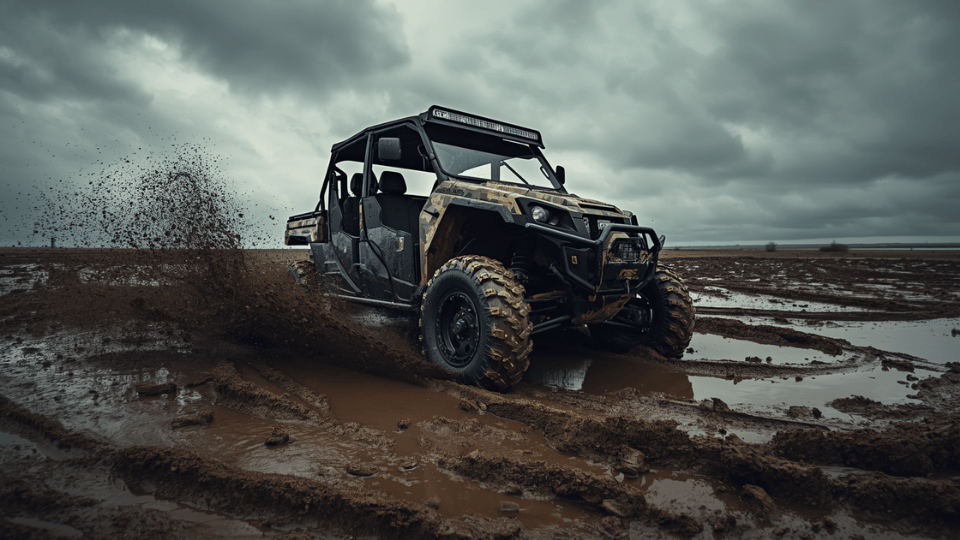
A quiet revolution is unfolding across the muddy battlefields of Ukraine. While aerial drones hog the media spotlight, a quiet shift toward automated ground operations is underway. US defense technology startup Forterra has deployed more than 100 of its self-driving rugged terrain vehicles to active conflict zones over the past nine months. Company leaders believe this represents the largest layout of autonomous ground vehicles in active combat by any American defense tech firm.
The project relies on modified commercial platforms. Named the Lancer, each vehicle starts as a gas-powered Polaris ATV framework. Forterra engineers then strip down the baseline units and install a custom-built sensor cluster and a localized computer processing hub. To maintain data connections across remote areas, crews mount a Starlink satellite antenna straight onto the vehicle’s frame. These buggies carry up to 750 kilograms of vital supplies, making them highly effective logistics pack mules for frontline squads.
Since arriving last October, the automated fleet has clocked over 2,500 total miles across more than 1,100 operational missions. The supply buggies have moved 777,440 pounds of hardware, ammo, and food. They also handle incredibly risky assignments, successfully completing 52 urgent medical casualty evacuations to pull wounded soldiers out of the line of fire.
Despite these impressive milestones, the realities of high-intensity warfare show that robot driving systems still face severe limitations. Ukrainian troops cannot yet let these buggies wander completely on their own. Because the software cannot reliably identify hidden enemy troops or react to sudden threat ambushes in real time, soldiers primarily operate the buggies via remote control links.
The terrain presents another brutal obstacle. Several Lancers have met their end after getting permanently bogged down in deep mud or high grass. Once a vehicle gets stuck, it becomes a sitting duck for Russian artillery strikes or explosive drone drops. Because the machines are too valuable to lose, frontline commanders often keep them back unless the situation demands robot assistance.
To solve these software bottlenecks, Forterra is trying to blend classic robotics scripts with fresh generative artificial intelligence models. The goal is to build an adaptable on-device intelligence framework that allows a buggy to scan its immediate surroundings, map out a safe route across a cratered field, and dodge enemy positions without relying on a constant satellite link.
Competitors are racing to solve the exact same hardware problems. Startups like Skydio and Overland AI are actively pitching their own autonomous navigation systems to the Pentagon. Still, American military experts remain convinced that ground automation has officially proven its baseline value in active combat zones. Shifting the administrative burden of running supply lines over to automated machinery keeps human troops out of harm’s way, transforming how modern armies manage logistics under fire.