
Less than three months after emerging from stealth mode, robotics startup XDOF is in late-stage talks to secure a Series B funding round at a valuation near $1.2 billion. Venture firm BVC leads the potential investment deal according to sources familiar with the negotiation terms.
UC Berkeley researchers Philipp Wu and Fred Shentu co-founded XDOF in 2024. The company previously raised a $70 million Series A round in June supported by Thrive Capital, Andreessen Horowitz, Lux Capital, and Spark Capital. Although the team planned to pause fundraising, rapid sales growth reaching nearly $50 million in annualized revenue brought venture capital firms back to the table with fresh capital offers.
XDOF builds specialized data pipelines, collection rigs, and annotation tools for physical artificial intelligence models. The company acts as an outsourced data supply chain for the robotics industry, giving research labs direct access to real-world physical training datasets.
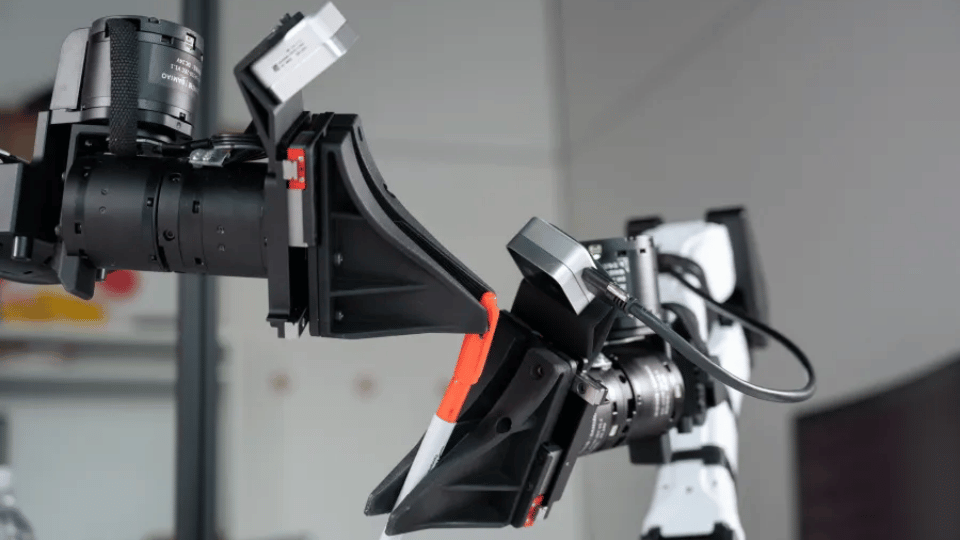
While completing his doctoral studies, Wu identified a core hurdle facing physical robotics: developers lacked access to massive physical training datasets. To solve this problem, Wu paired with Shentu to create GELLO, a low-cost teleoperation rig allowing human operators to control robotic arms remotely and record movement data.
That initial research project grew into XDOF. Investors now describe the business as a physical equivalent to Scale AI or Mercor. Unlike standard text models that pull training data off the open web, physical robots need hands-on human movement logs to learn daily physical tasks like folding laundry or packing boxes. Gathering real-world physical movement data represents the single largest operational bottleneck in building general-purpose machines.
To meet market demand, XDOF partnered with UC Berkeley’s AI research lab to publish ABC, a massive collection of robot training data. To capture these datasets, human operators wear body sensors while completing routine physical tasks or steer robotic arms through remote teleoperation setups.
The company plans to hire global teams of data collectors, combining remote teleoperators and sensor-equipped workers to capture precise movement data. XDOF currently works with 20 primary clients, including several leading frontier research labs. Other startups building physical datasets include Mecka AI, alongside expanding human-data platforms like Micro1.
Building reliable human movement datasets gives robotics developers the baseline records needed to train physical models. As research labs scale up hardware production, securing real-world movement data will separate working machines from static prototypes.