
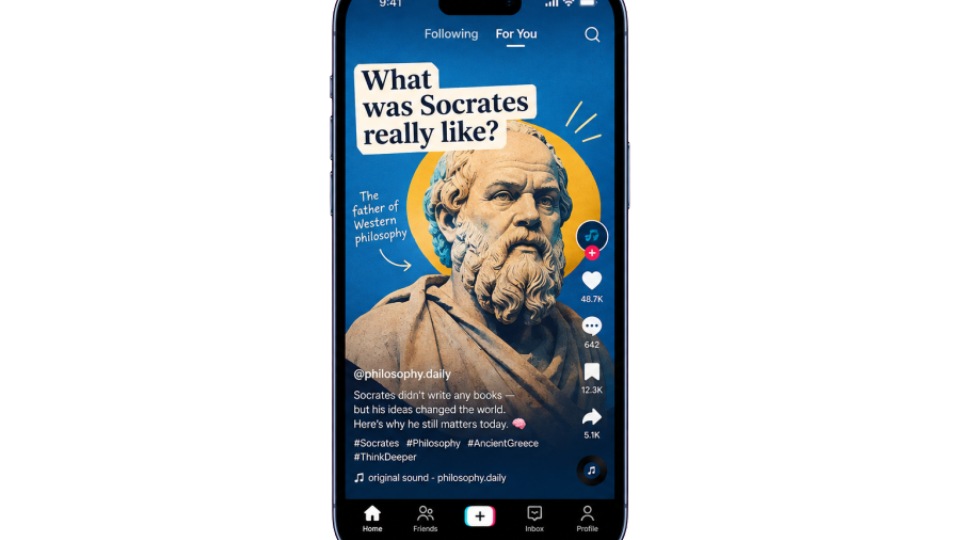
People love complaining about short attention spans and doomscrolling on social media. Critics often point fingers at endless video feeds, claiming they ruin concentration and make studying for exams nearly impossible. But a Palo Alto startup called ScrollEd believes the fix isn’t to stop scrolling. Instead, they want to change what students scroll through every day.
ScrollEd pitched its app at the TechCrunch Disrupt Startup Battlefield 200 competition with a clear idea. If students refuse to sit down and open a heavy textbook, the learning materials must adapt to vertical social feeds.
The platform takes dry text files, PDFs, or complete textbook chapters and converts them into an interactive feed resembling TikTok or Instagram Reels. As users scroll through the application, lessons appear as AI-generated short videos, clear text cards, audio clips, and quick interactive quizzes. Swiping up brings up a fresh subtopic, while swiping sideways lets students explore a single topic in greater detail before finishing with a comprehension test.
Co-founder Utsav Gupta explained that younger students rely heavily on short, vertical feeds for daily information. That habit creates serious hurdles for traditional long-form reading. Gupta noted that instead of fighting how students consume content, educational tools should meet them on platforms they already use. He added that a brief clip can spark curiosity, leading students to search for deeper explanations directly inside the app.
Gupta bootstrapped ScrollEd alongside his wife and co-founder, Rebecca Neff. The idea grew after both founders felt frustrated by late-night social media scrolling. Gupta studies artificial intelligence at Stanford, while Neff studies computer science at the University of Pennsylvania. Together, they built a tool designed for schools, company training teams, and everyday users who want meaningful content on their phones.
ScrollEd uses a freemium business model. The basic video feed remains free for individual consumers, while a paid Pro tier unlocks extra study features. The team also sells institutional licenses to schools and corporate training programs. Educational partners pay to deliver study materials through the platform, receiving back detailed reports on student engagement, lesson progress, and learning trends.
Looking ahead, ScrollEd plans to expand its core lesson library and refine its source-checking features. The team is also launching pilot programs with schools to test how well the system tracks student comprehension over time. The founders want to build adaptive software that evaluates individual student performance and adjusts lesson difficulty automatically. By turning study sessions into interactive feeds, ScrollEd hopes to make daily learning as effortless as opening a social app.