
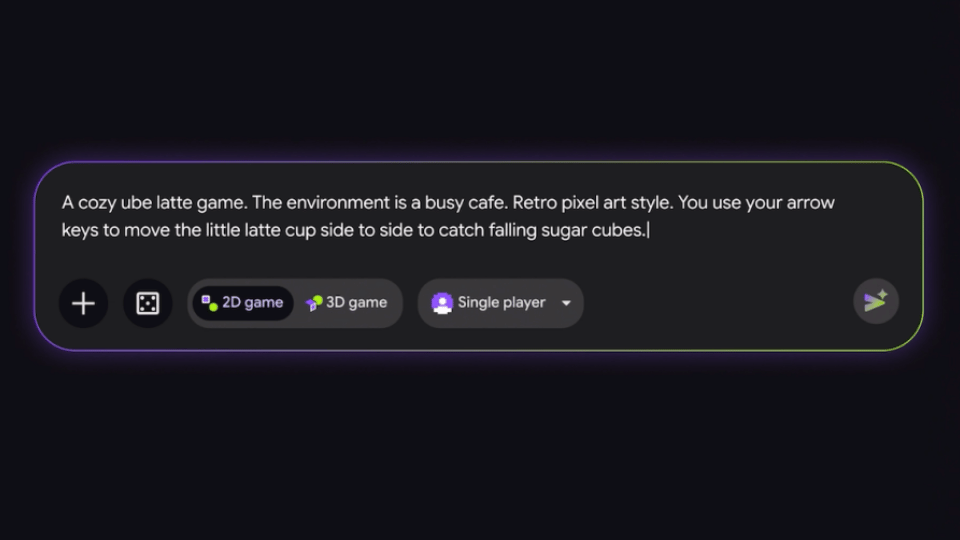
Google Labs launched Playground, an experimental game creation platform designed to let users build browser-based video games using plain text prompts. The launch removes traditional barriers to entry like coding knowledge, complex art software, and engine architecture. By turning natural language descriptions into active, playable titles, Google gives everyday users the ability to design 2D and 3D games directly inside their web browsers.
Creators using Playground can start a game project entirely from scratch or select pre-made game genres such as trivia and racing. The system lets creators choose between single-player and multiplayer modes before describing desired core mechanics, rules, and visual themes. Beyond basic text descriptions, creators can upload custom visual assets, allowing the built-in artificial intelligence models to adapt custom artwork into consistent game styles.
Games generated inside Playground run across both mobile browsers and desktop computers. Creators can keep active projects private, share live test links with friends, or publish finished titles directly to Playground’s Explore gallery. Published games support interactive features like real-time leaderboards, while creators retain the ability to edit mechanics, tweak art, and push updates even after a title goes live.
Google also revealed plans to integrate Unity Spark into future updates for the platform. Connecting with Unity’s established development engine will provide advanced 3D rendering capabilities and professional-grade game physics, expanding what creators can build through simple text prompts. Adding professional physics engines bridges the gap between simple browser mini-games and complex interactive software.
The experimental platform is currently open to users aged 18 and older in the United States. Browsing and playing games in the public catalog is completely free. Game generation operates on a weekly token system, offering free tier users a set number of build tokens while Google One AI subscribers receive expanded usage limits.
Google enters a rapidly expanding market for prompt-based game development tools. Competitors like Roblox introduced similar natural language build tools earlier this year to speed up creation workflows for young developers. Furthermore, Playground expands on Google’s long-running interest in gaming infrastructure, following previous efforts like its Stadia cloud streaming service and YouTube Playables instant mini-games.
Lowering software development barriers completely changes how online media moves. When creating a custom video game becomes as fast as typing a short text prompt, user-generated content shifts from static images and videos toward fully interactive experiences. Providing accessible creation tools empowers casual creators to turn quick ideas into playable browser games in minutes, reshaping how people play, share, and build software online.