
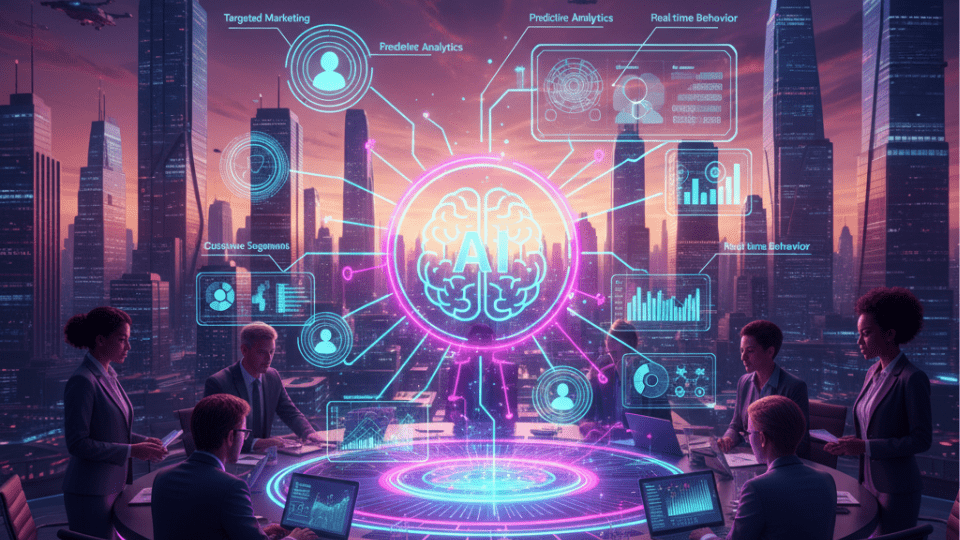
In an increasingly commoditized market, generic experiences no longer cut it. Customers, empowered by choice and inundated with information, expect brands to understand their individual needs, preferences, and even anticipate their next move. The era of broad strokes marketing and one-size-fits-all customer service is rapidly fading. The key to staying ahead by 2025 lies in mastering AI personalization, leveraging artificial intelligence to deliver hyper-targeted, deeply relevant experiences at scale. This isn’t merely about addressing customers by name; it’s about fundamentally transforming how businesses engage, operate, and achieve unparalleled efficiency.
Understanding the Individual at Scale with Data
The bedrock of effective AI personalization is a deep, continuous understanding of each individual customer. This requires moving beyond basic demographic segmentation to analyzing rich behavioral data, preferences, and intent signals at scale. By 2025, robust data infrastructure will be critical to feed AI personalization engines.
Focus on:
- Unified Customer Profiles: Aggregate data from all touchpoints (website, app, CRM, email, social media, purchase history) into a single, comprehensive customer data platform (CDP).
- Behavioral Tracking: Implement advanced analytics to monitor real-time user behavior, including clicks, searches, view times, and interactions, to understand immediate intent.
- Predictive Analytics: Use AI to analyze historical data and predict future customer actions, such as purchase likelihood, churn risk, or next best offer.
- Sentiment Analysis: Deploy AI to analyze customer feedback, reviews, and social media interactions to gauge sentiment and identify areas for improvement.
This deep, AI-driven understanding of the individual allows businesses to move from guesswork to precision, making every interaction count.
Delivering Hyper-Targeted Marketing and Communications
Generic marketing campaigns are wasteful and ineffective. By 2025, AI personalization will enable businesses to deliver hyper-targeted marketing and communications that resonate deeply with each customer, driving engagement and conversion efficiency.
Leverage AI for:
- Dynamic Content Personalization: Automatically tailor website content, email messages, and in-app experiences to each user based on their profile and real-time behavior.
- Personalized Product Recommendations: Implement AI-driven recommendation engines that suggest products or services highly relevant to an individual’s tastes, past purchases, and browsing history.
- Optimal Timing and Channel Selection: Use AI to determine the most effective time and channel (email, SMS, push notification, in-app message) to reach a customer with a specific message.
- Targeted Advertising: Integrate AI insights with ad platforms to serve highly personalized ads to specific customer segments, improving ad spend efficiency and ROI.
By delivering the right message, to the right person, at the right time, through the right channel, businesses will achieve significantly higher engagement and conversion rates, optimizing marketing spend.
Core Components for 2025 AI Personalization
- Customer Data Platform (CDP): A unified, real-time customer data repository.
- Machine Learning Algorithms: For predictive modeling, segmentation, and recommendation engines.
- Omnichannel Integration: Seamless delivery of personalized experiences across all customer touchpoints.
- A/B Testing & Optimization Tools: For continuous refinement of personalization strategies.
Elevating Customer Service and Support Experiences
AI personalization extends far beyond marketing; it’s transforming customer service into a proactive, empathetic, and highly efficient function by 2025. Generic support interactions will become a relic of the past, replaced by tailored solutions.
Integrate AI to personalize customer service by:
- Intelligent Chatbots: Deploy AI chatbots that access a customer’s full history and preferences to provide personalized, contextualized answers and solutions.
- Proactive Problem Resolution: Use AI to predict potential customer issues (e.g., service outages, product malfunctions) and proactively reach out with solutions before the customer even contacts support.
- Personalized Agent Routing: Route customers to the most appropriate human agent based on their profile, query type, and previous interactions, ensuring faster and more effective support.
- Customized Self-Service: Tailor self-service portals and FAQs to individual user needs, presenting relevant information first based on their behavior and common issues.
Personalized customer service creates a feeling of being valued and understood, dramatically improving satisfaction, loyalty, and reducing the burden on human agents.
Optimizing Product Development and Innovation
AI personalization isn’t just about how you interact with customers; it’s also about what you offer them. By 2025, AI will drive product development and innovation by providing granular insights into customer preferences and unmet needs.
Leverage AI to optimize product development by:
- Identifying Feature Gaps: Analyze customer feedback, support interactions, and usage data to pinpoint common frustrations or unmet needs that new features could address.
- Personalized Product Roadmaps: Use AI to understand demand for specific functionalities among different customer segments, guiding the prioritization of product development efforts.
- A/B Testing Product Variations: Utilize AI to quickly test and optimize different product features or UI elements for specific user groups, ensuring maximum appeal.
- Predicting Market Trends: Analyze vast datasets (social media, news, competitor activity) to predict emerging trends and consumer preferences, informing future product innovation.
This data-driven approach ensures that products and services are developed with the customer at the center, increasing their relevance and market success.
Ethical Considerations and Trust-Building
Achieving AI personalization for 2025 efficiency isn’t solely about technological prowess; it’s deeply rooted in ethics and trust. As personalization becomes more sophisticated, so too must the commitment to responsible AI practices.
Prioritize:
- Transparency and Consent: Clearly communicate to customers how their data is being used for personalization and provide easy-to-manage consent options.
- Data Security and Privacy: Implement robust security measures to protect sensitive customer data, adhering to regulations like GDPR and CCPA.
- Bias Mitigation: Continuously monitor AI algorithms for biases that could lead to unfair or discriminatory personalization, ensuring equitable experiences for all.
- Value Exchange: Ensure that the personalization delivered genuinely benefits the customer, providing them with more relevant experiences rather than simply harvesting data.
By operating with integrity and transparency, businesses can build deep trust, transforming personalization from a mere marketing tactic into a cornerstone of customer loyalty.
Achieving AI personalization for 2025 efficiency is a strategic imperative for any business aiming to thrive in the modern economy. By understanding individuals at scale, delivering hyper-targeted communications, elevating customer service, optimizing product development, and upholding ethical standards, organizations can unlock unprecedented levels of engagement and operational efficiency. This isn’t just about better customer interactions; it’s about building a more responsive, insightful, and ultimately, more successful business. What is the first step your organization will take to achieve true AI personalization by 2025?