
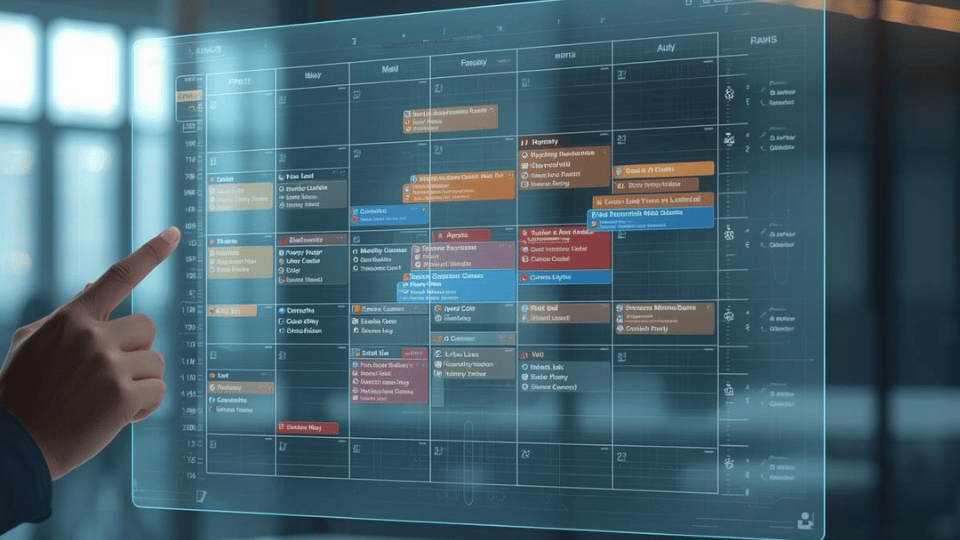
The average professional spends over four hours a week, which is a full month every year, simply coordinating meetings. This hidden drain on productivity is not just about finding an open slot. It represents a fundamental breakdown in how we value human attention and organizational momentum. For modern teams operating across multiple time zones and specialized roles, the complexity of a simple “sync” becomes exponential. The true use of AI in scheduling is not merely to find an empty spot in a calendar. It is to optimize an organization’s most precious resource, time, by aligning every minute with strategic objectives.
Optimizing Resource Allocation Beyond Simple Availability
Traditional scheduling tools operate on a single, binary principle of availability. They look for empty blocks in a calendar and assume any open space is fair game. However, modern teams require far more sophisticated orchestration than a simple gap-search. AI-powered scheduling goes beyond the surface level to consider critical factors such as project deadlines, individual workload, and the specific skill sets required for a task. It ensures that a crucial meeting is not just scheduled, but scheduled optimally. It places the right people with the right expertise together at the moment when they are most likely to be effective.
The tangible outcome is a significant increase in meeting effectiveness and a dramatic reduction in calendar bloat. Instead of irrelevant participants or poorly timed discussions that interrupt a developer’s deep work, every scheduled event has a higher probability of yielding productive results. This intelligent allocation of human capital is where the real ROI of AI scheduling is realized. It moves teams from a reactive scheduling model to a proactive, strategic one. This ensures that every hour spent in a conference room or on a video call contributes directly to the bottom line.
Eliminating the Coordination Tax of Complex Logistics
For distributed or hybrid teams, scheduling a single meeting can feel like a logistical nightmare. Different time zones, varying departmental priorities, and individual preferences create a web of constraints that a human brain is not designed to manage efficiently. Manual coordination often leads to endless email chains or suboptimal meeting times that favor one group while inconveniencing another. AI scheduling untangles this web instantly. It processes all these variables concurrently and presents the most efficient times for all stakeholders.
This eliminates the coordination tax that currently bogs down project managers and administrative staff. They can finally redeploy their energy toward higher-value tasks that require human judgment and creativity. The system automatically handles reminders, time zone conversions, and virtual meeting integrations. It sends personalized links and instructions without a single manual click. This level of automation means that complex cross-functional or international meetings are no longer a source of dread. They become a seamless, frictionless part of the daily operational flow.
Proactive Conflict Resolution and Dynamic Prioritization
Calendars are not static environments. Priorities shift, emergencies arise, and unexpected conflicts emerge in the middle of a Tuesday afternoon. A human scheduler can only react to these changes after they happen, often causing a domino effect of cancellations and frustration. AI scheduling operates proactively. It can anticipate potential conflicts based on known project timelines and individual commitments before they become a crisis. If a high-priority client call suddenly appears, the AI identifies lower-priority meetings that can be rescheduled and notifies all parties with appropriate context.
This intelligent conflict resolution ensures that critical work always takes precedence without causing organizational chaos. It provides a real-time, dynamic view of an organization’s entire meeting landscape. This constant optimization prevents scheduling clashes from derailing important initiatives and maintains a smooth workflow even in fast-paced startup environments. The system acts as a vigilant guardian of the team’s collective time. It is constantly seeking the most efficient path forward and adjusting the “flight plan” of the workday as new data arrives.
Integrating with Project Management for Task Alignment
Meetings should not be isolated events that exist in a vacuum. They are integral components of larger project workflows. The true use of AI scheduling involves deep integration with the project management tools where the actual work lives. When a meeting is scheduled, the AI can automatically link it to relevant tasks and update project timelines. It can even assign pre-meeting preparation materials to participants based on their role in the project. This ensures that every meeting is directly tied to actionable outcomes.
This alignment transforms meetings from static calendar entries into dynamic project milestones. After a meeting concludes, the AI can trigger follow-up tasks based on discussed action items, ensuring accountability and continuity. This seamless flow between communication, scheduling, and task management creates a unified operational ecosystem. It eliminates the common problem of a great meeting resulting in zero action. By embedding execution directly into the scheduling process, the AI ensures that the momentum generated during a discussion is never lost.
Enhancing Employee Experience and Well-being
Constant, poorly organized meetings are a leading cause of employee burnout and “zoom fatigue.” They disrupt focus time, extend workdays, and create unnecessary mental stress. AI scheduling, when implemented strategically, can significantly improve the employee experience. By optimizing meeting times and protecting focus blocks, it empowers individuals to manage their energy more effectively. The system can learn individual preferences, such as avoiding early morning calls for night owls or ensuring a gap between back-to-back sessions.
This human-centric approach to scheduling demonstrates an organization’s commitment to its employees’ well-being. When individuals feel their time is respected and their work-life balance is considered by the system, engagement and productivity naturally increase. This is not just a soft benefit. It translates directly into higher retention rates and a more vibrant, energetic workforce. The AI becomes an invisible assistant that helps everyone work smarter. It removes the stress of the “calendar shuffle” and gives people back the time they need to do their best work.
Future-Proofing Operational Agility
The business landscape is constantly evolving, requiring teams to be agile and responsive to market shifts. Outdated, manual scheduling processes are a major bottleneck to this agility. AI scheduling provides the flexibility and adaptability needed to thrive in dynamic environments. It allows organizations to rapidly reconfigure team structures and adapt to new project demands without the typical administrative overhead. As the team grows, the system scales with it, managing thousands of potential meeting combinations with the same ease as a small group.
By centralizing the logic of “who meets when,” the organization becomes more resilient. The knowledge of how the team functions is no longer trapped in the heads of a few assistants. It is codified in a system that can be optimized and improved over time. This data-driven approach allows leadership to see patterns in how time is spent and make informed decisions about resource allocation. You are not just scheduling meetings. You are building a scalable operating system for the most important asset your company has.
Final Strategic Insight: Time as a Competitive Advantage
Time is the ultimate non-renewable resource in any business. The true application of AI in scheduling is not about automation for its own sake. It is about elevating time management to a strategic core competency. When your scheduling is intelligent, your team is focused. When your team is focused, your execution is flawless. The winners of the next decade will be the organizations that stop fighting their calendars and start using them as a weapon for growth.
The Operational Chaos Angle: Cleaning Up Messy Stacks Is your team’s calendar a battlefield of conflicting invites and wasted hours? It is time to clear the chaos and reclaim your focus. xuna.ai transforms your unruly scheduling stacks into a perfectly orchestrated agenda, ensuring your team’s time is always aligned with your most critical objectives. visit xuna.ai