
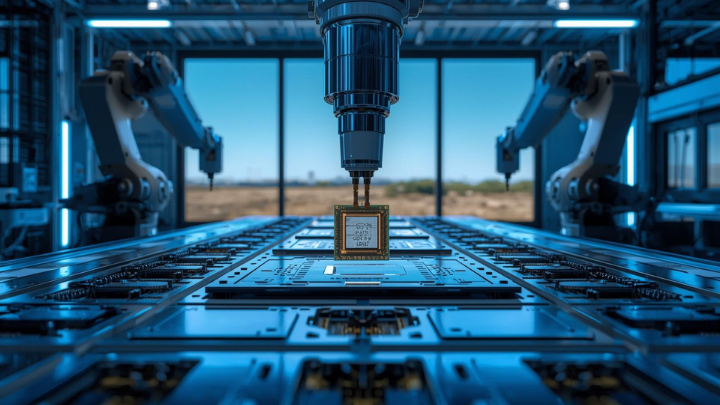
Elon Musk is moving the goalposts again. This time, he is planning to build his own computer chips by having Tesla and SpaceX work together. He shared this vision on a Saturday night in Austin, Texas. The plan centers on a massive new facility he calls the Terafab. He wants to build it right near the existing Tesla headquarters and Gigafactory in Austin. Musk says he is doing this because existing chip makers simply cannot keep up with his needs. He needs massive amounts of computing power for artificial intelligence and advanced robotics. In his view, the only way to get the chips he needs is to make them himself.
The numbers he is throwing around are huge. He wants to produce enough chips to support 100 to 200 gigawatts of computing power on Earth every year. But he didn’t stop there. He also mentioned a goal of reaching a terawatt of power in space. It is a bold claim, even for a guy who sends rockets to orbit and builds electric cars by the millions. However, he did not provide a specific timeline for when this factory will actually start churning out hardware.
This move follows a trend of big tech companies taking control of their own supply chains. For years, companies relied on specialists to design and build their processors. Now, everyone from Apple to Google is making custom silicon to get an edge in AI. Musk feels that the current semiconductor industry is a bottleneck for his ambitions. If Tesla wants to solve self-driving and SpaceX wants to manage complex Mars missions, they need specialized hardware that off the shelf parts cannot provide.
Musk is essentially saying that if you want something done right, you have to do it yourself. He sees the Terafab as a necessity rather than a choice. Without these custom chips, he believes his companies will hit a wall. This vertical integration is a classic Musk move. He did it with batteries for Tesla and with rockets for SpaceX. By owning the manufacturing process, he hopes to cut costs and speed up innovation.
Of course, there is plenty of room for skepticism. Building chips is incredibly difficult and expensive. It requires clean rooms that are cleaner than hospital operating rooms and machines that cost hundreds of millions of dollars. Musk does not have a formal background in semiconductor physics or manufacturing. He has also built a reputation for setting deadlines that he does not meet. Critics often point out that while he eventually delivers on big ideas, the path is usually much longer and messier than he admits at the start.
The implications for the broader tech industry are massive. If Musk succeeds, he could reduce his dependence on giants like Nvidia or TSMC. It would also make Austin an even bigger hub for high tech manufacturing. For now, the Terafab exists only as a plan and a catchy name. But if history is any guide, Musk will pour everything he has into making it a reality. Whether he can actually produce chips at a terawatt scale remains the biggest question in tech right now.