
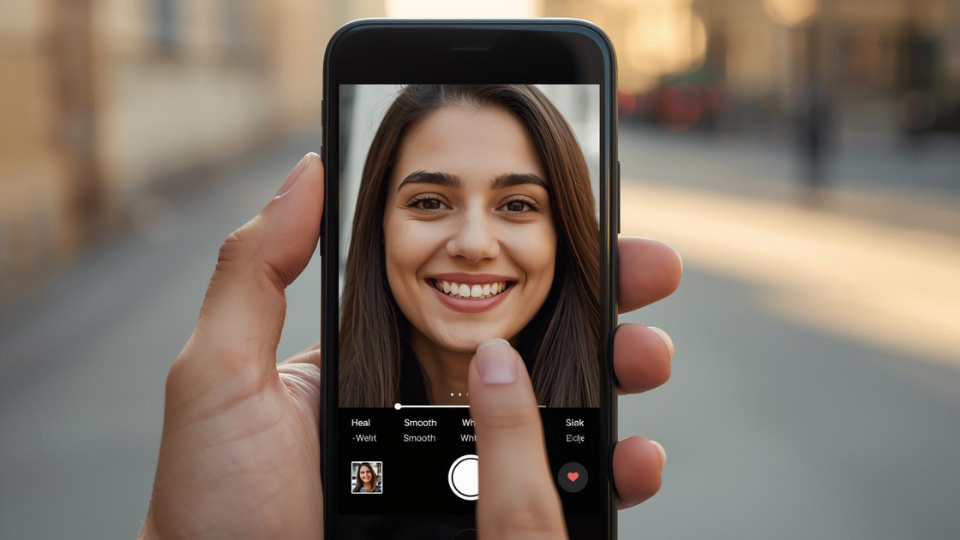
Google just made it a lot easier to fix your selfies without ever leaving your photo gallery. On Monday, the company announced a major update to the Google Photos image editor. They are rolling out a new set of “touch-up” tools designed specifically for quick, subtle fixes to faces. If you have a small blemish you want to hide or you think your smile could use a little extra shine, you can now handle it with just a few taps.
These new features go way beyond basic filters. When you open a photo, you can select a specific face to start the process. From there, Google gives you a menu of targeted options. You can use the “heal” tool to remove spots, “smooth” to refine skin texture, or “brighten” to make eyes pop. There are even specific settings for whitening teeth, adjusting eyebrows, and refining lips. Once you pick a tool, a simple slider appears so you can decide exactly how strong you want the effect to be. This puts professional-grade retouching power right into the pocket of the average smartphone user.
Keeping You Inside the App
This move is a smart play by Google to dominate the photo world. For years, people have jumped over to third-party apps like Facetune or specialized filters on Instagram to polish their portraits. By building these tools directly into Google Photos, the tech giant ensures that you stay within their ecosystem. They want to be your only stop for storage, organization, and now, high-end editing. If the native tool is just as good as the paid apps, most people will choose the convenience of staying put.
The update is gradually rolling out to users all over the world. To get these features, you need an Android device running version 9.0 or higher with at least 4 GB of RAM. This covers most modern phones sold in the last few years. While the initial focus is on Android, the history of Google Photos suggests that iOS users will likely see these same tools arrive on their iPhones very soon.
The Responsibility of a Perfect Face
While these tools are fun and useful, they do come with some heavy baggage. Social scientists have spent years studying how constant photo retouching affects our brains. Multiple studies show that when we constantly “fix” our faces in photos, it can lead to negative feelings about our real-life appearance. It can hurt self-esteem and even cause body image issues.
Google seems to understand this balance. They are marketing these as tools for “quick fixes” rather than total digital surgery. By using a slider system, they encourage users to keep things subtle. However, the reality is that the line between a “subtle fix” and a “fake face” is getting thinner every day. As we move into an era where every photo we see is perfectly polished, we have to remember that a real person still exists behind all those pixels. These tools are powerful, but it is up to us to use them in a way that doesn’t make us lose sight of our actual selves.