
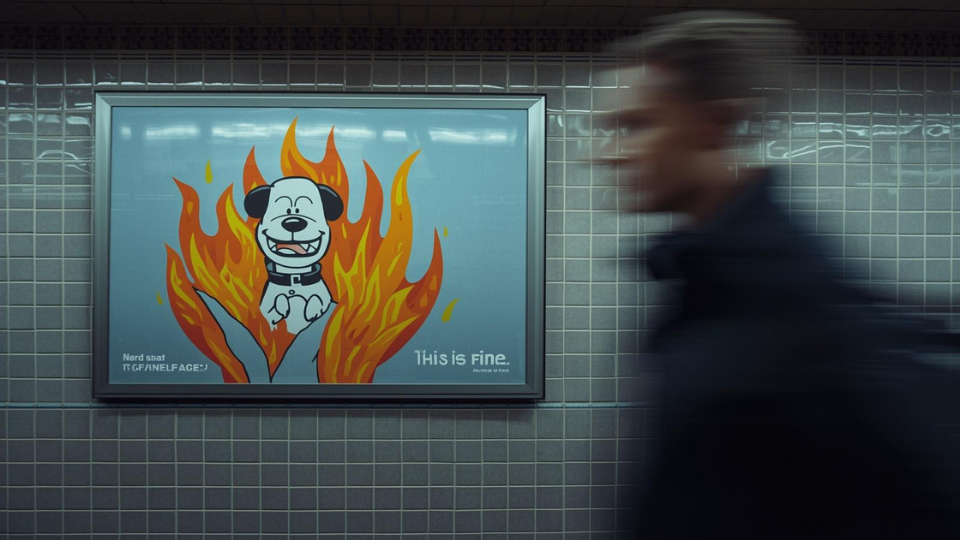
You know the image. A cartoon dog sits at a table, smiling while a house burns down around him. He calmly says, “This is fine.” It is one of the most famous memes on the internet, but the man who drew it is not laughing. KC Green, the artist who created the comic in 2013, recently found his work being used to sell AI software without his permission.
An AI startup named Artisan is the company behind the move. They used a modified version of Green’s “Gunshow” comic in a subway ad. In their version, the dog says his “pipeline is on fire” while a message over the top tells people to “Hire Ava the AI BDR.” Green found out about the ad after fans started tagging him on social media. He made his feelings clear immediately. He told his followers that the art was stolen, just like the data used to train many AI models. He even told people to vandalize the ad if they saw it in person.
When Tech Meets Copyright
Artisan did not start small. They have already sparked anger with other ads, like billboards that tell companies to “Stop hiring humans.” While the CEO, Jasper Carmichael-Jack, says his message is about a “category of work” rather than real people, artists like Green see it differently. For them, this is about large companies taking the creative work of individuals and using it to build a future that might put those same creators out of a job.
When asked about the stolen art, Artisan told reporters they have “a lot of respect” for Green. They said they were reaching out to him to talk it over. But for Green, the damage is already done. He feels like these “no-thought AI losers” think memes just appear out of thin air. He reminds everyone that memes are art created by real people who deserve to be paid and asked before their work is turned into a billboard.
The Cost of Protecting Your Art
Green is now looking into his legal options, but he is not happy about it. He told reporters that having to fight this in court “takes the wind out of my sails.” Instead of spending his time drawing new comics and telling stories, he now has to spend it talking to lawyers and dealing with a legal system that often moves slower than the tech companies that break the rules.
He is not the first artist to fight back. Other creators, like Matt Furie, have successfully sued groups for using their characters in ways they did not like. Furie, the creator of Pepe the Frog, took on massive websites and won. Green might have to do the same to prove that just because an image is famous on the internet, it does not mean it is free for any startup to grab.
This fight highlights a growing problem in the AI age. As startups race to build new tools, they often ignore the rights of the people whose data and art they are using. They treat the internet like a free buffet. But as artists like KC Green stand up for their work, these companies are finding out that “fine” is the last thing this situation actually is.