
A high profile digital fake just met its match in a major win for online truth. A realistic image circulating across social media platforms this week shocked internet users by showing Kentucky Senator Mitch McConnell lying in a hospital bed covered in medical tubes and appearing in a state of extreme physical distress. The image quickly went viral, picking up massive traffic across discussion boards on Reddit and feeds on X. People immediately began debating the status of the senator’s health, since he has been largely out of the public eye following an emergency hospital visit on June 14. The absence of a real public statement from the senator’s office had left a massive information vacuum, and online tricksters took full advantage of the situation by creating a highly realistic visual hoax. Speculation ran wild that his health was rapidly failing, but a deep tech verification check proved that the viral image was a complete lie.
The famous fact checking website Snopes stepped in to investigate the viral picture as the internet panic grew. By Wednesday, the researchers officially debunked the photo. They discovered that the file contained a hidden tracking code generated by Google’s SynthID framework, confirming without a doubt that an artificial intelligence tool created the entire scene. The digital mark did exactly what its creators designed it to do, securing a rare and high profile victory for anti deepfake technology in the ongoing war against online misinformation. The technology did not prevent the creation of the fake image, but it provided a definitive trail that investigators could follow to prove the deception.
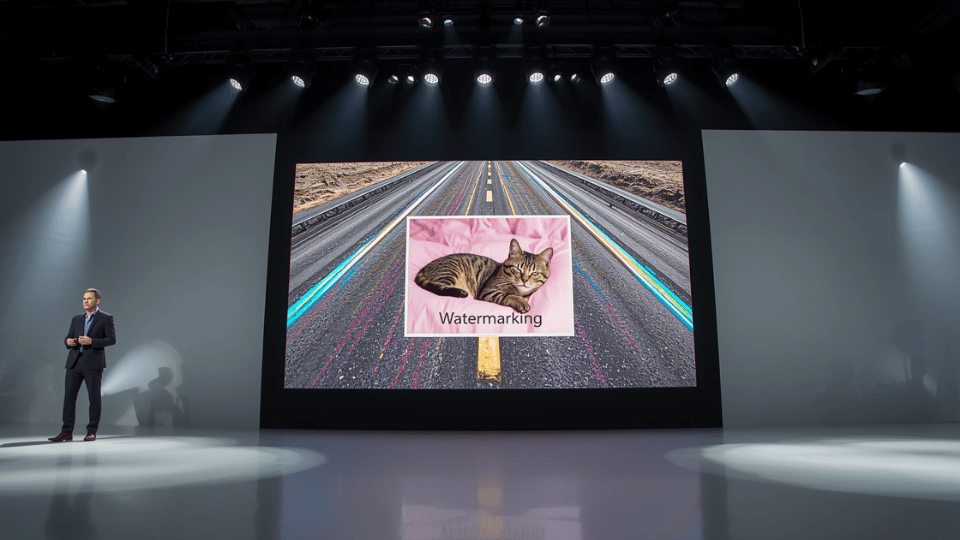
Google originally introduced this tracking system at its I/O developer conference back in 2025. The software functions like an invisible digital signature embedded deep within the pixels of an image. While a regular human looking at the photo cannot see the tracking code at all, specialized verification algorithms can read it instantly. The tech is incredibly durable because the signature stays cooked into the actual image data. This means it survives even when users take simple screenshots of the photo or share compressed versions across different social networks, which is exactly how the fake picture of the senator spread so quickly across the web.
The technology has a major limitation that depends entirely on industry cooperation. The tracking code only works if the specific software tool used to generate the image is part of the verification program. Google built the system into its own Gemini models right at the start in 2025. OpenAI later joined the safety initiative in May 2026 as part of a wider industry push to stop the spread of malicious digital media. However, some major technology operations still refuse to cooperate, with Anthropic currently staying completely out of the tracking program.
Regular web users can easily test files themselves to see if a picture is real or generated by a computer. You can check any suspicious file by uploading it directly to OpenAI’s public image verification tool or by asking a Gemini model to scan the data for the hidden signature. As digital manipulation tools become more common and harder to spot with the naked eye, these background security codes are becoming our main defense line against political hoaxes and online deception.