
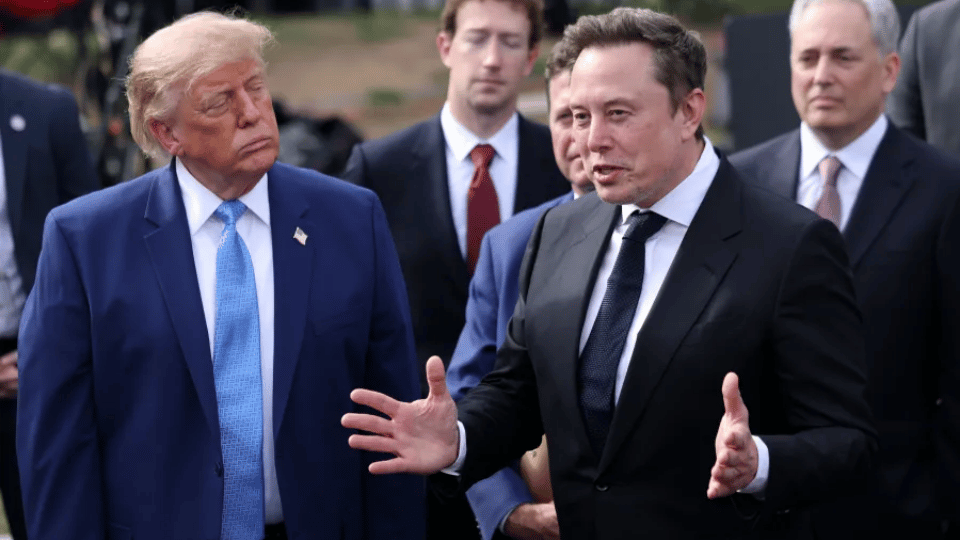
President Donald Trump gathered prominent leaders across the artificial intelligence sector at the White House to introduce a high-profile safety pledge. The executive meeting brought together high-profile tech executives including Mark Zuckerberg, Satya Nadella, Sundar Pichai, and Elon Musk. While official announcements framed the gathering as a landmark step toward managing super intelligence, the resulting agreement consists entirely of voluntary commitments without regulatory enforcement mechanisms.
During a discussion on TechCrunch’s Equity podcast, tech journalists analyzed the political motivations behind the White House summit. The meeting served as a strategic rebranding initiative to address public skepticism surrounding artificial intelligence applications and data center expansion. To counter growing public anxiety over automated systems and massive power requirements, political leaders and tech executives opted to shift public narrative focus toward long-term super intelligence while introducing voluntary guardrails.
The core document signed during the White House press conference carries no legal weight, making compliance completely optional for participating tech firms. Political analysts pointed out that voluntary safety pacts allow technology companies to avoid legislative oversight while maintaining full control over product development timelines. By avoiding federal regulation, tech firms preserve rapid deployment schedules while projecting a public image of responsible corporate governance.
Internal government friction further complicated the policy rollout leading up to the summit. Reports revealed significant disagreements between federal agencies regarding regulatory control over tech infrastructure. While the Treasury Department supported collaborative industry frameworks, Defense Department officials voiced strong reservations about restricting access to cutting-edge software models. The contrast highlights ongoing debate within government leadership between enforcing strict oversight and accelerating national technology deployment.
Despite public statements celebrating the non-binding safety agreement, the lack of enforcement mechanisms leaves critical questions unanswered. Without statutory mandates, independent oversight committees, or financial penalties for non-compliance, voluntary pledges rely entirely on corporate self-regulation. Critics emphasize that asking multi-billion-dollar tech corporations to self-police creates obvious conflicts of interest, especially when market competition demands fast feature deployment.
Reframing current operational risks around distant theoretical concerns allows both political figures and corporate executives to control the public narrative. While headlines focus on super intelligence and futuristic scenarios, immediate issues like data privacy, copyright claims, energy consumption, and job displacement receive less regulatory action. The White House gathering demonstrates how voluntary pledges can serve as political tools to soften public resistance without imposing hard legal boundaries on fast-growing industries.
As tech companies expand infrastructure and roll out advanced software agents, relying on non-binding agreements will face growing public scrutiny. Building public trust requires clear regulatory standards, transparent auditing processes, and enforceable safety rules. Until federal agencies establish clear legal guidelines, corporate safety pledges will remain symbolic gestures rather than binding safeguards for consumer protection.