
President Donald Trump announced the creation of the Super Intelligence Force, a federal task force directed to maintain American dominance in advanced computing technologies. National Intelligence Director Jay Clayton leads the new body alongside key administration figures, including Federal Trade Commission Chair Andrew Ferguson, Undersecretary of War for Research and Engineering Emil Michael, and Office of Personnel Management Director Scott Kupor serving as vice chairs.
The task force coordinates federal efforts across agencies to ensure the United States stays ahead of global rivals in next-generation computing. In a public social media statement, Trump framed super intelligence as a technology shift larger than the Industrial Revolution or the launch of the internet. The administration tasked the new group with protecting national interests, supporting domestic workers, and streamlining government adoption of advanced software systems.
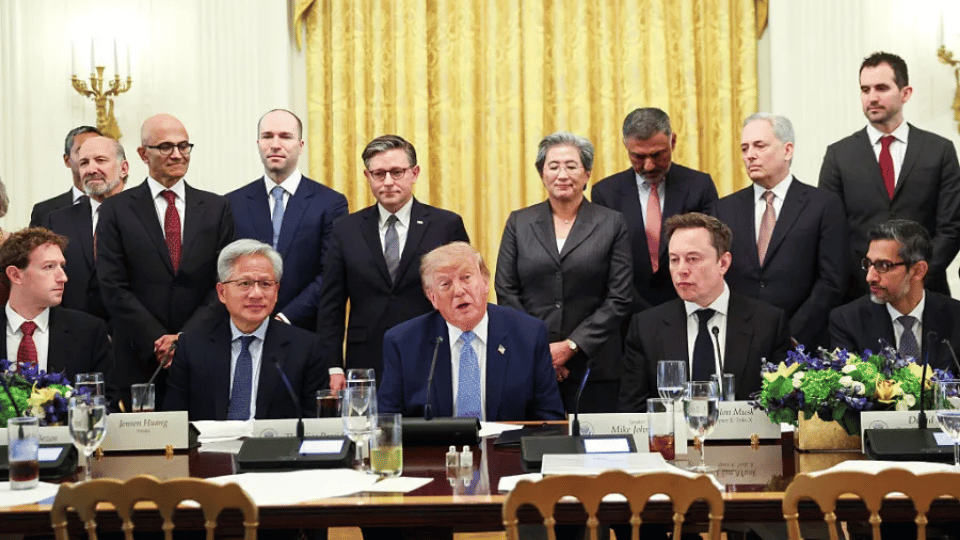
The initiative follows an executive order officially rebranding federal artificial intelligence programs under the banner of super intelligence. Trump previously dismissed safety concerns as political posturing, but moved forward with establishing a dedicated task force and appointing an AI czar. The launch comes shortly after tech executives gathered at the White House to sign a non-binding safety agreement.
The Super Intelligence Force has a 120-day window to evaluate risks, map strategic opportunities, and present a comprehensive report to executive leadership. Clayton publicly warned against falling behind international competitors, emphasizing that slowing domestic development creates far greater risks than rapid deployment. He stressed that allowing competing nations like China to gain a lead in advanced software capabilities would compromise long-term national security.
Beyond international competition, the charter instructs the task force to draft strategic plans for handling potential technology threats without stalling market innovation. Administration leadership specifically warned against heavy-handed regulatory frameworks, arguing that excessive compliance rules lead to regulatory capture and protect incumbent tech monopolies while choking out early-stage startups.
Forming a high-level task force signals a major shift toward aggressive federal back-stopping of private software development. Rather than creating legislative barriers or strict oversight agencies, the White House intends to clear federal obstacles and accelerate national deployment. Combining defense research leaders, trade regulators, and intelligence directors inside a single advisory group merges commercial innovation directly with state security priorities.
Focusing heavily on global competition will fundamentally reshape government procurement, defense integration, and technology exports. As federal agencies streamline deployment pathways, private software builders will gain direct access to government contracts. Establishing the Super Intelligence Force proves that the White House views software acceleration as a critical strategic priority, setting the stage for aggressive domestic development.