
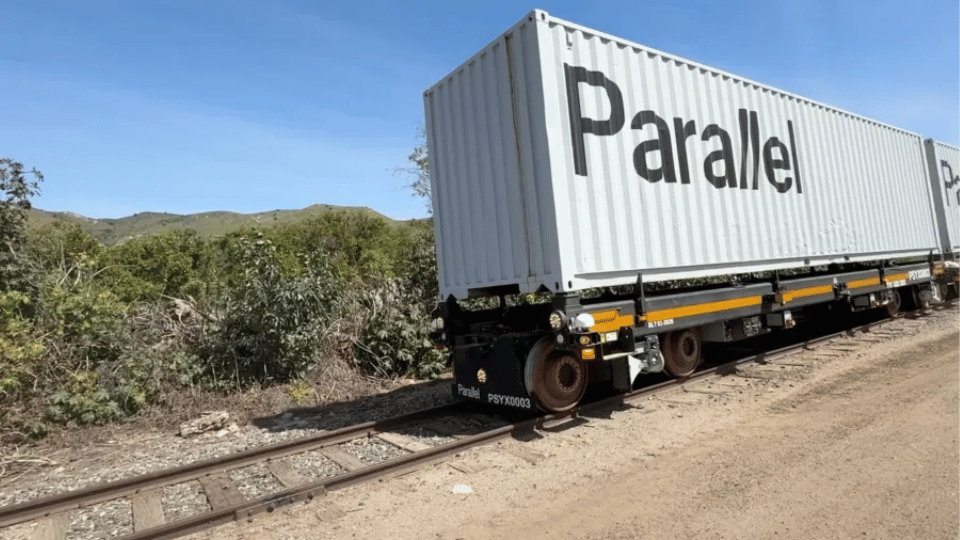
Former SpaceX engineers launched Parallel Systems in 2020 to overhaul short-haul freight rail operations using autonomous, battery-electric rail cars. Led by co-founder and chief executive officer Matt Soule, the company secured a $100 million Series C funding round led by Anthos Capital and venture firm AVR. Additional participation came from Hilspire, Agility Global, Cobalt Capital, Congruent Ventures, Riot Ventures, and Collaborative Fund. The fresh capital funds manufacturing for Parallel’s third-generation autonomous rail vehicle, known as the Panther, as the startup expands commercial operations.
The legacy railroad industry historically prioritized extremely long freight trains running fixed schedules, effectively abandoning shorter shipping routes under 500 miles. As major railroads pulled back from short-distance routes, trucking fleets absorbed the massive volume, capturing a dominant share of the $1 trillion domestic surface freight market. However, diesel price surges, driver shortages, highway congestion, and supply chain bottlenecks near major sea ports forced shipping lines to seek more efficient alternatives. Around 60% of US freight trips cover distances under 500 miles, creating a massive market for autonomous rail solutions.
Parallel Systems builds individual, self-propelled electric rail cars capable of carrying standard shipping containers over distances up to 500 miles on existing track infrastructure. Unlike traditional long trains held together by heavy mechanical couplers, Panther vehicles form uncoupled platoons that travel closely together down rail tracks using onboard sensors and autonomous controls. When an uncoupled platoon reaches a rail yard or intermodal hub, individual cars split off autonomously to separate tracks without requiring manual switching delays or complex yard repositioning.
Operating autonomous electric vehicles on rails eliminates traditional highway traffic delays while dramatically lowering carbon emissions compared to long-haul diesel trucks. Onboard camera arrays, optical sensors, and computer vision systems monitor track conditions constantly, detecting physical hazards and stopping safely when encountering obstacles on rail lines. By bypassing crowded highway corridors around busy shipping terminals like the Port of Savannah, self-driving rail cars help drayage companies move cargo faster, dodge gridlock, and increase total daily delivery trips.
Regulatory progress has moved quickly alongside hardware testing. Eighteen months ago, Parallel Systems obtained special regulatory approval from the Federal Railroad Administration to run real-world testing operations on 160 miles of track near the Port of Savannah in Georgia. Live testing verified onboard safety systems, braking performance, autonomous platooning protocols, and operational workflows across real shipping corridors.
Scaling autonomous rail transport bridges the gap between regional trucking lines and national freight networks. Shifting heavy shipping container movements from highway lanes to existing, underutilized rail corridors reduces road wear, cuts transportation delays, and builds a cleaner supply chain. As Parallel Systems advances toward its first full-scale commercial deployments, self-driving electric rail cars promise to make regional rail shipping faster, cheaper, and far more flexible for modern logistics operators.